Byte
ChatGPT Is Now More Creative Than the Average Person. The Top 10% Still Beat It.
ChatGPT Is Now More Creative Than the Average Person. The Top 10% Still Beat It.

Mahmud Hasan
October 8, 2026
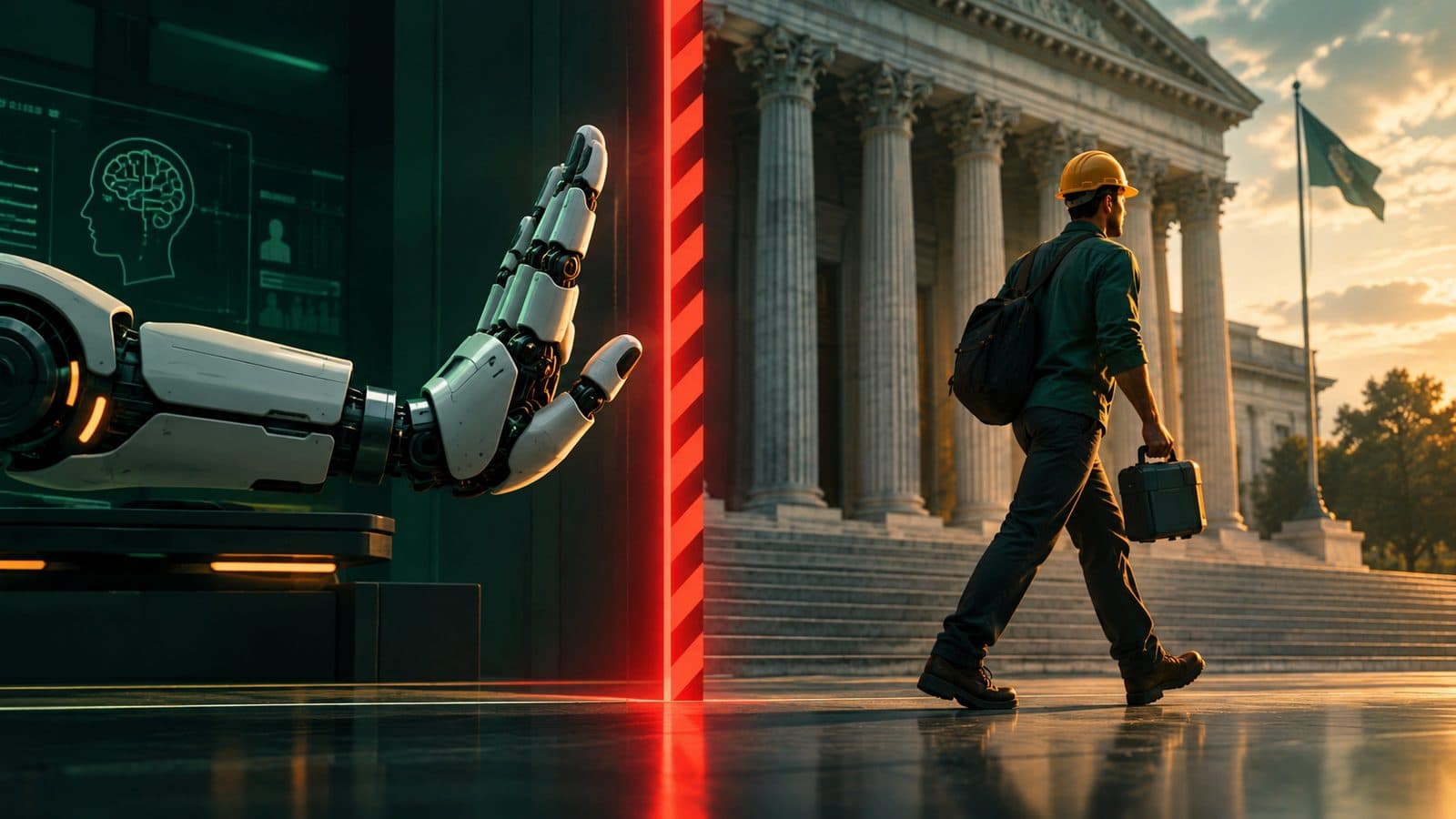
More than 100,000 people sat the same creativity test as GPT-4, Claude, and Gemini. The models won — against the average person. Against the best humans, they lost. And among the top 10%, the gap didn't shrink. It got bigger.
That's the finding from the largest direct comparison of human and machine creativity ever run. The "AI is coming for creators" debate has been stuck on a binary — replaced or safe — and the data says the actual shape is a floor and a ceiling. AI raised the floor. The ceiling hasn't moved.
The test took two minutes
The study — "Divergent creativity in humans and large language models," published in Scientific Reports in January 2026 — was led by Karim Jerbi at the Université de Montréal, with Yoshua Bengio and Jay Olson among a team spanning UdeM, Concordia, the University of Toronto, Mila, and Google DeepMind. Their instrument was the Divergent Association Task, a test Olson himself created: name ten words that are as unrelated in meaning as possible. A strong answer looks like galaxy, fork, freedom, algae, harmonica, quantum, nostalgia, velvet, hurricane, photosynthesis.
It's deliberately unglamorous. Scoring is computed from the semantic distance between the words — math, not vibes. It takes two to four minutes online, and DAT scores predict performance on the heavier creativity tests used in writing and problem-solving. Over 100,000 humans and several leading models took it. Same task, same scoring, no special pleading.
The floor moved. The ceiling didn't.
The results split cleanly into two stories, and most coverage only told the first. Story one: some models — GPT-4 among them — scored higher than the average human. That's where the "AI is more creative than humans" headlines stopped, and it's where the framing goes wrong.
Story two is the interesting one. The top half of human scorers beat every model tested. Among the top 10%, the gap got wider still. Peak human creativity isn't just ahead of the models — it's pulling away faster than the models are catching the average.
They checked whether this was an artifact of the word game with real creative writing too — haiku, movie synopses, flash fiction, compared against film databases and poetry archives. Same pattern: models sometimes beat the average writer; the best human writers were consistently more original.
There were two findings anyone using these tools should read twice. First: AI outputs were repetitive. Models kept producing the same words across attempts, while humans kept surprising. Turning up the temperature — the setting that controls how adventurous the model's choices are — narrowed the difference but didn't erase it. Second: prompting matters enormously. Prompts that nudged the model to think about word origins and structure produced more unexpected associations and higher scores. Jerbi's own summary: even though AI can reach human-level creativity on certain tests, "we need to move beyond this misleading sense of competition."
Meanwhile, the industry quietly agreed
While the lab results say the ceiling is safe, the market is already repricing what sits under it. Luma's inaugural "State of Creative Professionals and AI: 2026" report — 760 U.S. creative professionals surveyed, unveiled at Brandweek in September — found that 81% have shipped AI-generated or AI-assisted work. The tooling war is basically over: 72% rate their access to AI tools as good or excellent.
But here's the number that pairs with the lab data: 62% are very or extremely concerned about becoming too reliant on AI at the expense of human creativity. And the economics are splitting. Fifty-five percent of agency respondents expect AI to justify higher fees, while 53% of brand-side respondents expect to cut agency spending because internal AI tools let them do more in-house. Both can be right: agencies are pricing judgment, brands are pricing production. The report's conclusion is that the value of creative work is shifting toward outcomes, strategic thinking, and judgment rather than production.
Same shape as the study. Production — fluency, drafts, variations — is the floor, and the floor is cheap. Judgment is the ceiling, and the ceiling is where the money is going.
What the tools do to the people learning the craft
A paper published this week in Frontiers in Psychology adds the missing piece: what happens inside the creator. Zhang and Xing followed 389 design students at a South Korean university across three survey waves, measuring how coursework-related AI use connected to creative confidence and output. The headline association is positive: more pedagogical AI use went with higher creative self-efficacy (β=0.489), lower tool anxiety, and a total association with creative cognition of β=0.456.
Read the fine print the way a designer would read a brief. The study is observational, not causal — the authors say so explicitly. The mechanism that did the heavy lifting was competence, not comfort: believing you can do the work carried roughly eight times the weight of being less anxious about the tools. And the paper's literature review contains the warning that should hang over every studio: writers given AI-generated opening ideas produced stories rated more creative — with the biggest gains among the least creative writers — while the stories themselves grew more similar to each other. Fluency went up per person; diversity went down across people.
That's the originality gap in a workplace: everyone's drafts get better, and everyone's drafts start to sound alike.
The counter-argument, addressed once
The obvious objection: listing ten unrelated words isn't creativity. Fair — the researchers would agree the DAT measures one slice of divergent thinking, not the whole of making something. But the slice is the load-bearing one: it's the phase where options get generated before judgment picks among them, and it's exactly the phase AI has industrialized. What the study can't automate — and what the top-decile humans keep winning — is everything after: taste, selection, the weird association nobody else would defend, the willingness to kill the good option for the strange one. Psychology has overclaimed about creativity before — this month a The Conversation piece once again buried the "right-brained people are more creative" myth. Skepticism about neat creativity stories is a tradition, not a take.
What to actually do
If you create things for a living, the research implies an embarrassingly concrete playbook:
- Use AI for fluency, not for finish. Drafts, variations, first passes — the floor is cheap. The Frontiers study suggests the real benefit is the confidence to keep going, not the output itself.
- Protect the variance. Compare alternatives, raise the temperature, ask for the option the tool wouldn't suggest first. Sameness is the tax on free fluency.
- Prompt like it matters, because the study says it does. Specificity and constraints beat open-ended "be creative" every time. Constraints are where the good stuff lives — a finding D&AD's 2026 trend report reached from the opposite direction, studying 50,000 award entries.
- Price judgment, not production. If your value proposition is "I can produce assets," you're competing with the floor. If it's "I know which asset is right," you're at the ceiling — and the ceiling is undefended.
Machines beat the average human. That was always going to be the headline. The useful version is quieter: being average at generating options is no longer a skill. Being strange on purpose still is.
References
- Theodore (Ted) Stark, "The Originality Gap: What 100,000 Humans Revealed About AI Creativity?", Studio Quick Facts, October 2026 — studioquickfacts.com
- ScienceDaily, "Researchers tested AI against 100,000 humans on creativity", January 25, 2026 — sciencedaily.com
- Luma, "State of Creative Professionals and AI: 2026" via Business Wire, September 16, 2026 — businesswire.com
- Zhang & Xing, "Pedagogical GenAI use and self-reported creative cognition in art education", Frontiers in Psychology, published October 6, 2026 — frontiersin.org
- The Conversation via MedicalXpress, "Are right-brained people really more creative?", October 2, 2026 — medicalxpress.com
Comments
More in Design & Creativity
Apple's New CEO Just Made Himself Its Design Chief. He's an Engineer. That's the Point.
John Ternus visits Apple's design studio several times a week — Tim Cook came about once a month. Seven years after Jony Ive left, the CEO has made himself the company's design chief, and the bet is that one decision-maker beats a committee.
Read more