Apple HomeView Is $299. An 'Apple Home' Runs $1,500.

Mahmud Hasan
October 16, 2026
Apple's $299 smart display goes on sale November 13 — but the $299 is a decoy. The doorbell and the lock alone cost double the hub, the wall mount is sold separately, and Europe can't buy one at all. Here's what the price actually covers, and what it hides.
What Apple actually announced
At its "Welcome Home" experience in New York on October 13, Apple announced three things and previewed a fourth. The headline act is HomeView, a 7-inch square smart display that runs the new Siri AI and acts as the front door to your Apple smart home. It costs $299 in both versions — tabletop and wall-mounted — with pre-orders open now and retail availability starting November 13.
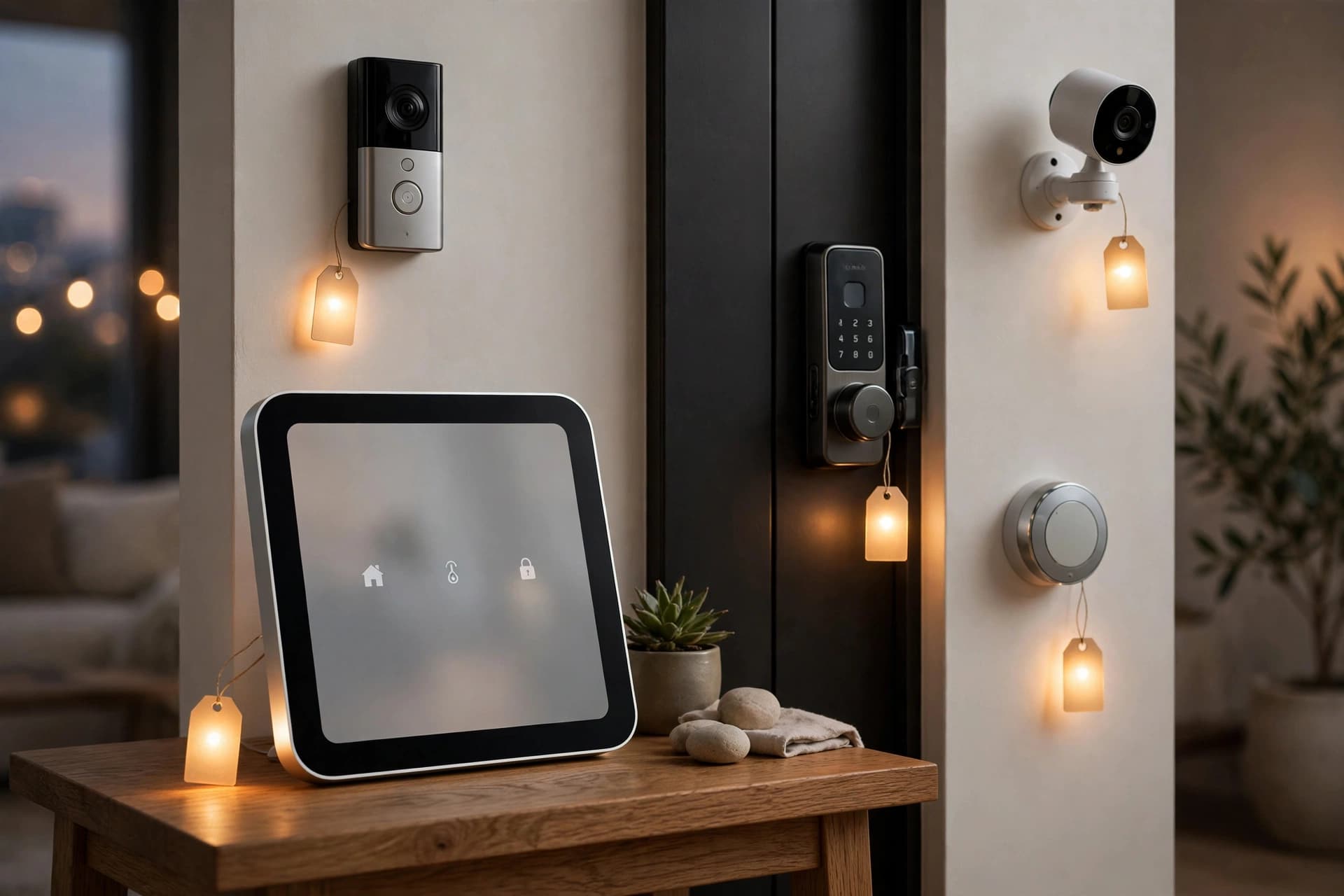
Alongside it: a HomePod mini 2 ($149, arrives October 30) and a fourth-generation Apple TV 4K ($299, November 13, A19 chip, built-in microphones for hands-free Siri AI). And the fourth thing, the one that actually matters: Apple Home Collection, a lineup of cameras, a video doorbell, a deadbolt lock, and a thermostat co-developed with LG Electronics and Schneider Electric. Prices run from $39.95 for a sensor to $399.95 for a floodlight camera. Accessories start arriving in December, with some pushed to early 2027.
What $299 actually buys you
The HomeView is a 7-inch Liquid Retina display (1088×1088, True Tone, 0.3–500 nits) wrapped in aluminum, sitting on a speaker base that Apple says sounds better than the HomePod mini. Inside is an A18 chip with 8 GB of RAM — iPhone-16-class silicon — driving the new Siri AI, which is in beta at launch and English-only for now.
The clever parts are all identity and continuity. On-device facial recognition handles up to six household members, each getting their own personalized home screen, apps, and notifications. Start a Siri request on the HomeView and the thread syncs through iCloud so you can finish it on your iPhone, iPad, Watch, Mac, or Vision Pro. The 12MP Center Stage camera doubles as a FaceTime camera and a HomeKit Secure Video monitor — with an eligible iCloud+ plan it can identify familiar people, pets, packages, and vehicles, and even listen for smoke or CO alarm sounds and ping your phone.
As a hub, it's the real thing: HomeKit controller, Matter controller, and Thread border router, plus Wi-Fi 6E and Bluetooth 6.0. Privacy gets the full Apple treatment — camera and mic data are isolated in "Secure Exclaves" within the A18, and Siri requests go on-device or through Private Cloud Compute, which Apple says neither stores nor exposes to Apple or anyone else. Those are Apple's claims; the architecture is at least designed for them.
The fine print
Three catches matter before you spend anything:
- No EU at launch. HomeView won't be sold in the European Union initially because Siri AI isn't available on iOS there — a regulatory hurdle Apple hasn't cleared. Launch markets are the US, UK, Canada, Australia, New Zealand, India, and Singapore (Oct 15). South Africa goes through authorized resellers.
- No third-party apps. You get Apple's selection of apps and nothing else — there's no App Store for HomeView. What ships is what you get until Apple decides otherwise.
- The wall mount isn't in the box. The wall-mounted HomeView is $299, same as the tabletop — but the Schneider Home mounts that attach it cost $59.95 (USB-C) to $129.95 (PoE, early 2027) extra. The same device in India runs ₹39,900.
You also need an iPhone on iOS 27.2 or later (or an iPad on iPadOS 27.2) to set it up, and the Home Collection accessories don't start arriving until December — so the "full Apple home" isn't purchasable on day one.
What the $299 doesn't tell you
Here's the real price of an Apple smart home. The hub is $299. A video doorbell ($249.95) plus a smart deadbolt lock ($349.95) — the two products that make a smart home useful instead of decorative — cost $599.90 together, double the hub. Add the floodlight camera ($399.95) and the thermostat ($199.95) and you're at roughly $1,500 before mounts and sensors. The $299 is the admission ticket; Apple is selling you the house, not the screen.
Against the competition, the math is interesting. Amazon's 2025 Echo Show 8 lists at $199.99 — about $100 cheaper — with an 8.7-inch display and a Zigbee hub built in. Apple is charging a premium for the Apple-only integration: the on-device face recognition, the Secure Exclaves privacy story, the continuity across your devices. If your household isn't already Apple, most of that premium buys you nothing.
There's also the category's history to consider. Amazon reportedly lost around $25 billion on its smart-display hardware between 2017 and 2021, and the Wall Street Journal framed this launch as new CEO John Ternus's "next big swing." Apple's bet is that it doesn't need to win the hardware race — it needs to make the display the stage for Siri AI, and the accessories the actual revenue. A $299 hub that pulls $1,500 of companion hardware per household is a very different business than a $200 Echo Show.
Should you buy one?
Wait for November 13 reviews before pre-ordering — Siri AI in beta and English-only is a lot of "trust us" for a first-generation product. If you're going full-stack, the December/early-2027 accessory timeline matters more than the hub date. And if you're in the EU, there's no decision to make yet.
The people this is for are clear: households deep in the Apple ecosystem who want a HomeKit command center with a screen and genuinely care about on-device privacy handling. Everyone else can wait — and watch whether Apple's $1,500 home succeeds where Amazon's $25 billion effort stalled.
References
- Mac Observer — HomeView, HomePod mini 2 and Apple TV 4K: prices and release dates
- Eastern Herald — Apple HomeView: $299 Display, Pricier Smart Home Behind It
- MacRumors — 16 details leaked ahead of the Welcome Home event
- JamOnline — Apple HomeView technical specifications summary
- ZeeraWireless — Apple HomeView vs Amazon Echo Show 8
- NZ Indian Insights — privacy, Secure Exclaves, Private Cloud Compute
- Tech2Geek — HomeView vs HomePod 2nd-gen
Comments
More in Hardware & Gadgets

Is the AI Bubble About to Burst? The Honest 2026 Answer
The IMF just put a number on the AI-bubble debate: an investment bust could shave roughly a point off global GDP by 2028. This week gave both sides fresh ammunition — here is the honest middle.
Read more