Amazon Lost $25 Billion on Smart Displays. Apple Is Launching One Today Anyway.

Mahmud Hasan
October 12, 2026
Apple announced last week that it's holding a "Welcome Home" launch today — Tuesday, October 13. For a decade, Apple has circled the smart display category while Amazon and Google spent billions fighting over it. Tonight, at 9 AM Eastern (7 PM in Dhaka), Apple finally steps onto the floor. The specs aren't the interesting part. The timing is.
What Apple has actually confirmed
Stripping away the speculation, Apple's on-record facts are narrow. The company announced on October 8 that a product launch is scheduled for October 13 under the title "Welcome Home." Marketing chief Greg Joswiak's teaser — a clip of hands embroidering Apple's retro rainbow logo, captioned "Welcome home. October 13." — leaves little doubt about the category.
Apple has invited members of the media to an in-person "Apple Experience" in Tribeca, New York, at 9:00 AM Eastern. Here's a detail that matters: this launch was never added to Apple's Events page, so don't expect a keynote livestream. Expect press releases and short product videos, then hands-on coverage from the press in the room.
Apple itself confirmed the launch's focus includes the Apple TV 4K and the HomePod mini. That is the full list of things with Apple's name on them. Everything else below is attributed reporting — worth tracking, but not fact until Apple says so on stage.
What's rumored: "HomeView" and two refreshes
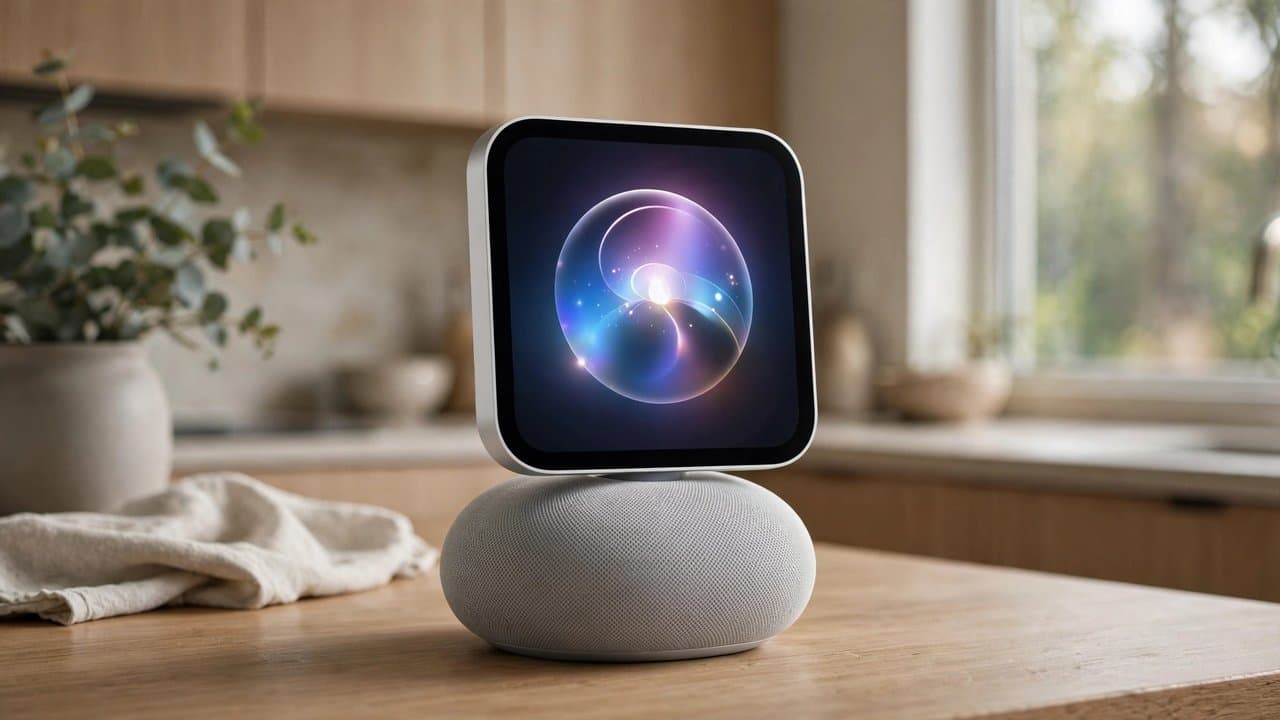
The most-watched rumor comes from Bloomberg's Mark Gurman, who reported on October 11 that the hub — a touch-display device crossing an iPad with a HomePod — will be called HomeView. The rumored design is deliberate: a roughly 6-inch square display in two versions — wall-mountable and a half-dome speaker base reminiscent of the iMac G4 — with a camera and a presence sensor that detects who's in the room and shows them a personalized interface of widgets and apps.
The rumored pitch is multi-person by default — smart home control, FaceTime, video, news, weather, calendar — voice-driven through the new Siri AI, with a rumored $350 price and a tvOS-based OS. One caution: this device has surfaced in rumor cycles for years, and every previous cycle ended with no product. This time there's a confirmed date. That's the real signal.
The other two are refreshes: a HomePod mini with new colors, an N1 networking chip, and a faster S-series processor for Siri AI; and an Apple TV 4K moving to an A19/A19 Pro chip with more RAM — the spec that decides whether on-device AI runs well — plus the N1 chip and an upgraded Siri Remote.
The display is the stage, not the show
The most consequential framing isn't a spec: the lineup is reportedly the showcase for Apple's new Siri AI assistant. A kitchen counter is the right demo surface for it — voice assistants matter more in the living room than behind a phone's lock screen, and a screen lets Siri show things voice alone can't sell: a recipe step mid-conversation, a video doorbell feed, a calendar conflict rendered visually.
The flip side: if the Siri AI demos underwhelm, none of the hardware specifics will rescue the launch. Analysts will score this event on the assistant, not the display.
The graveyard Apple is walking into
This is the category where Amazon lost over $25 billion between 2017 and 2021, according to internal documents covering Echo, Kindle, Fire TV, and Ring. The strategy was the classic razor-and-blades play: sell the Echo cheap, profit when people actually use it. It never happened — people used their Echos for alarms and weather, not shopping. A former senior employee's summary has become the industry's epitaph for the whole category: the team feared it had "hired 10,000 people and built a smart timer." Alexa alone was on pace to lose $10 billion in 2022, and the $1,600 Astro home robot ended up as an invitation-only curio with $1B+ in development costs.
Google fought the same war with Nest Hub devices since 2018. The gadget graveyard is full besides: Revolv's $299 hub, bought by Nest and bricked in May 2016; Amazon's Echo Look fashion camera; the Echo Connect, deactivated in February 2024 with a $10 gift card as consolation. The Matter standard quietly commoditized the whole hub business — cheaper third-party devices connect to everything anyway, which squeezes everyone's hardware margins.
Apple's own history is instructive. It launched HomeKit in 2014 — before the Echo or Google Home existed as consumer products — then sat out the hardware race for a decade, shipping speakers instead of screens. The original HomePod arrived in 2018 as a premium speaker first and a smart hub second, never caught Amazon or Google on volume, was discontinued in 2021, and came back in 2023. Framework first, hardware last, a decade late.
Apple's possible edge — if there is one
So what could Apple do that Amazon and Google couldn't? It has to sell something different from hardware, because the hardware loses on paper: a rumored 6-to-7-inch display against the Echo Hub's 8 inches and the Nest Hub Max's 10, at a rumored $350 against heavily subsidized rivals. Apple's differentiation would have to come from the assistant — Siri AI doing genuinely useful multi-person things, tightly integrated with the Home app and Apple silicon — rather than raw specs.
The one card Apple holds that nobody else can play is privacy-as-feature. A presence-sensing camera that knows who's standing in front of it is a hard sell in a bedroom from any company — except, maybe, the one that built its brand on on-device processing. If the pitch is "your house knows you and nobody else does," that's a different product than a smart timer with a screen.
The counter-argument is real: people buy smart displays for timers and weather, and nobody knows whether a privacy story supports a $350 price tag for that. Apple must make the hub feel like a member of the household — per-person recognition is the whole bet — not a speaker that grew a screen.
What to watch today
The event is 9:00 AM Eastern — 7 PM in Dhaka — and there's no public livestream, so watch the Apple Newsroom page and Apple's YouTube channel. The checklist is short: the name (HomeView?), the price, the ship date, and whether the presentation leads with Siri AI or with the hardware. If Apple leads with Siri, Gurman's framing was right — this is an AI launch wearing a gadget costume.
For developers: the HomeKit and Matter crowd should pay closest attention. A new display-class device is a fresh target surface with its own layout rules and Siri AI patterns, and a new Apple hub historically resets expectations around supported protocols and certification timelines for accessory makers. That's the part of today that could matter for your actual work.
For everyone else: don't preorder on day one. Let the Siri demos land, let the press test whether presence-sensing works for a household instead of a household of one, and remember October 27 is coming with the OLED touchscreen Macs. Apple is finally coming home. The question tonight is whether it built the house around the assistant — or just put a screen on the speaker.
References
- Apple Product Launch Announced for October 13: 'Welcome Home' — MacRumors, Oct 8, 2026
- Apple to Unveil Seven New Products Across October 13 and October 27 — MacRumors, Oct 9, 2026
- Apple Oct. 13 Event: HomePad, HomePod, Siri AI — Tech Insider, Oct 11, 2026
- Alexa is in millions of households — and Amazon is losing billions — Livemint (WSJ reporting), 2024
- Amazon Struggle with ROI in Smart Homes and IoT — EE Times
- Amazon Alexa Is A Bigger Failure Than We Realized — SlashGear (Business Insider reporting)
- 12 killer smart home gadgets that were left for dead — PCWorld
Comments
More in Hardware & Gadgets
In March, Google's AI Tanked Unity's Stock 22%. This Week They're Building Games Together.
Google's Playground turns text prompts into playable browser games, and Unity's Spark will add the professional tier — a direct shot at Roblox from the two companies that fought over AI gaming six months ago.
Read more